
Town of La Plata 2026 Scarecrow Competition– It’s an October tradition but the Spotted Lanternfly will not be defeated easily!
First the LaPlata Scarecrow Competition
!It’s time to get STUFFED…and not the turkeys, yet!The Scarecrow Competition is back. Businesses, organizations, families, and clubs are invited to build the most creative scarecrow in La Plata. Choose your category, install your masterpiece, and let the community vote for their favorite!Registration Deadline: Monday, September 28Installation: October 1–3Public Voting: October 4–18Voting Categories:?? America’s 250th | ?? La Plata Love | ? Thrills & Chills | ? Team Spirit | ? Celebrity Crow | ? Kids’ Creations
https://www.townoflaplata.org/293/Scarecrow-Competition
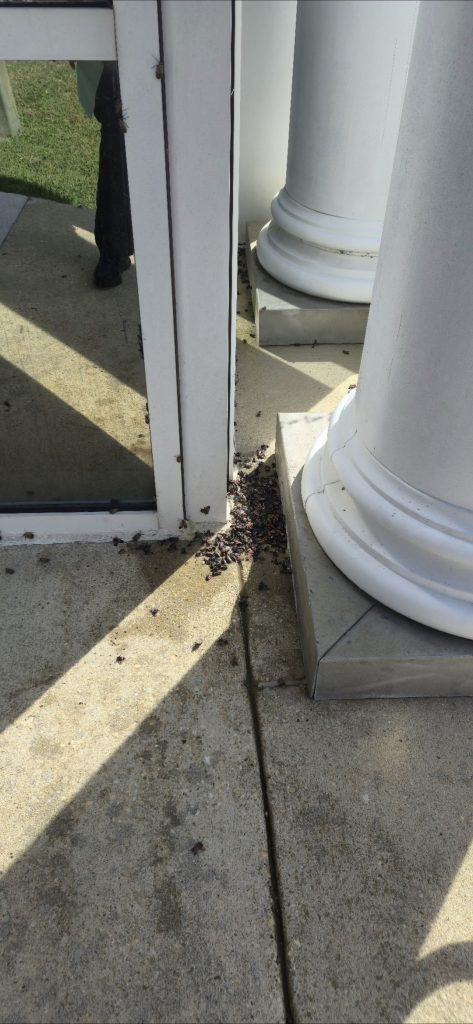
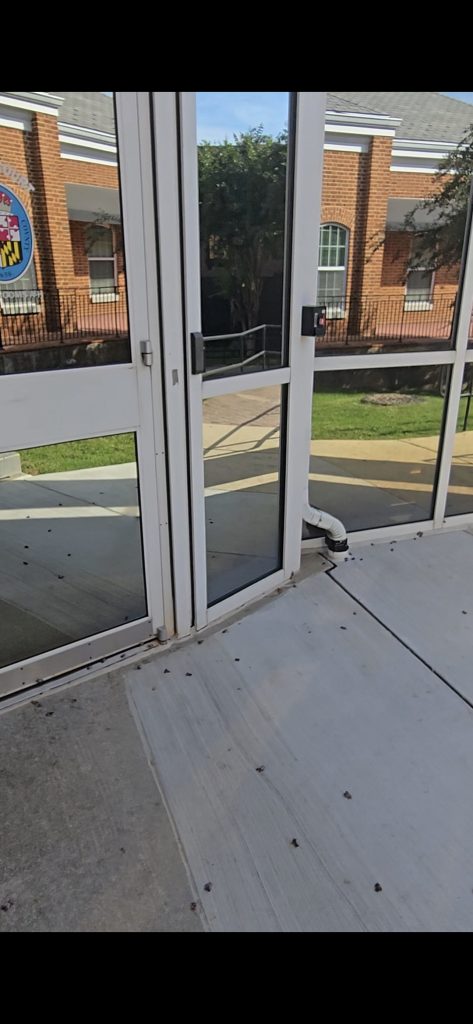
Now about the Spotted Lanternfly Adult spotted lanternflies, and seeing large numbers around the Charles County Courthouse area in early October makes sense biologically. Maryland is experiencing established spotted-lanternfly populations, and October is one of the peak periods for adults to congregate. They move around looking for host trees, mate, and lay eggs before the first hard freeze. University of Maryland Extension says the highest movement of adults generally occurs from August through October, and large groups can collect on trees and nearby structures. The courthouse can have a particularly noticeable concentration because lanternflies don’t stay only on trees. They land on buildings, doors, columns, sidewalks, stone, vehicles and other smooth surfaces. Your second and third photos show exactly that type of accumulation around the entrance. Females also lay egg masses on buildings and other hard surfaces. There’s another important local factor: Prince George’s County is currently classified among Maryland’s heavily infested counties, while Charles County is classified as having a lighter infestation. La Plata isn’t far from the Prince George’s population, and lanternflies can also spread by hitchhiking on vehicles and equipment. Because this is a public entrance, I would report the concentration rather than simply sweeping the dead insects away. Maryland Department of Agriculture says it still wants reports from every Maryland county, even where lanternflies have already been documented. Maryland Department of Agriculture — Spotted Lanternfly information and reporting
https://mda.maryland.gov/plants-pests/pages/spotted-lantern-fly.aspx
The bigger issue to watch over the next several weeks is egg masses. They look somewhat like gray/tan smears of dried mud and can be deposited on trees, walls, signs, outdoor furniture and other surfaces. The adults will die after freezing weather, but the eggs survive the winter and hatch next spring.
Spotted Lanternfly love the invasive Tree of Heaven.
The spotted lanternfly (Lycorma delicatula) heavily relies on the invasive tree of heaven (Ailanthus altissima) as its primary host plant and preferred food source. Both species share a native origin in China and form a destructive ecological pairing across North America.
Tree of Heaven Management: ?Tree of Heaven is also an invasive species. If you have tree of heaven on the property you can remove it. The Maryland Department of Agriculture does not have the resources to remove tree of heaven for you. To successfully remove tree of heaven you will need to completely remove its roots system. Cutting it down will trigger a defense mechanism resulting in shoots emerging around the base of the cut tree. More information on controlling tree of heaven can be found here?.
https://extension.umd.edu/resource/spotted-lanternfly-home-gardens/
https://extension.umd.edu/resource/tree-heaven/
Chemical Treatment: There are no insecticides on the market that will exclusively kill or repel spotted lanternfly from a property. Chemical treatment would require repeated treatments, which can be costly. Certain insecticides should only be used by professionals. It is also important to not treat your lawn for spotted lanternfly, as they do not reside in lawn grass and will not be impacted.
A picture is required when submitting a report. Submitting a report does not trigger a response from our team and is not considered a request for more information. If you have any questions or concerns, please email us at dontbug.md@maryland.gov. We are taking reports from every county in Maryland.2026 Scarecrow Competition– It’s an October tradition but the Spotted Lanternfly might be the Scariest Thing to Beat
Reel
https://www.facebook.com/share/v/1F1MsEWHhD/
This is an automated response. A member of the SLF team will address any questions or concerns as soon as possible.Thank you for contacting the Maryland Department of Agriculture’s Spotted Lanternfly Team. Your information helps us track spotted lanternfly (SLF) so we can help protect Maryland’s agricultural industries. At this time we are unable to conduct management for residential properties. If you are interested in practical management please let us know, or you can check out our spotted lanternfly webpage here.




About the Author